

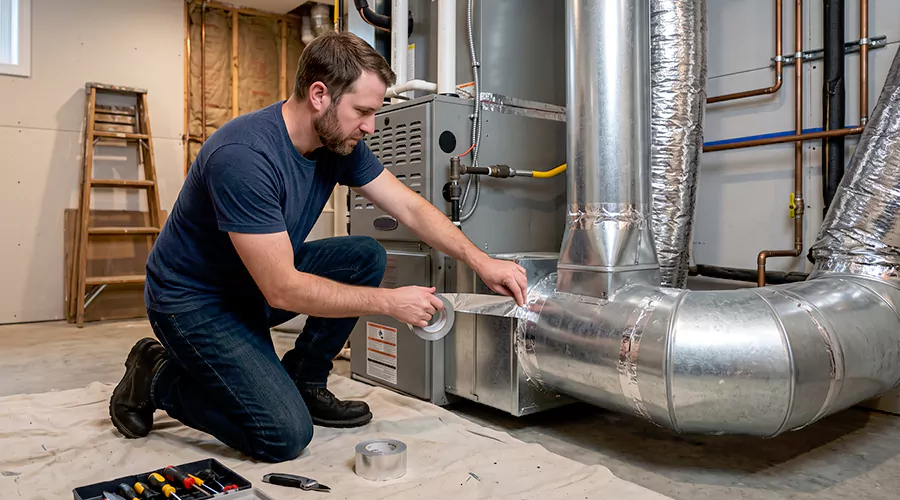
Air duct repair costs typically range from $200 to $2,100 in the United States in 2026, depending on the damage and work required. Many common residential repairs fall between $200 and $1,000, with a national average near $600. Minor leaks can cost less, while concealed duct damage or major section replacement can push the total higher.
Air ducts carry heated or cooled air throughout a home. When connections loosen or duct sections become damaged, some rooms may receive less conditioned air than expected. Duct leakage can also increase energy waste, particularly when openings allow air to escape into an attic or crawlspace.
The final repair price depends on the problem rather than the number of vents alone. A small gap at an exposed joint requires less work than a crushed flexible duct above a finished ceiling. Understanding typical costs by damage type and location can help homeowners compare repair estimates.
What Is the Average Air Duct Repair Cost in 2026?
The national average air duct repair cost is approximately $600 in 2026, with many ordinary residential projects falling between $200 and $1,000. A broader reported range reaches $2,100 because some repairs involve more extensive damage or difficult access. These figures represent repair work rather than complete duct system replacement.
A small accessible opening may need only sealing, while a separated branch can require mechanical reconnection. More complicated projects may involve replacing damaged duct material and restoring insulation. The cost increases when workers must open finished surfaces to reach concealed ducts.
| Cost Category | Estimated 2026 U.S. Price |
|---|---|
| Minor repair | $100 to $300 |
| Typical residential repair | $200 to $1,000 |
| National average repair | Approximately $600 |
| Broader duct repair range | $200 to $2,100 |
| Extensive or concealed damage | May exceed $2,100 |
The ranges overlap because they describe different project samples and repair scopes. A national average is not a guaranteed price for an individual house. The actual quote should identify the damaged components and explain the work required.
Some contractors also charge an initial diagnostic fee. This amount may be included in the final repair price or billed separately. Checking that detail prevents confusion when comparing estimates.
How Much Does Air Duct Repair Cost by Problem Type?
The type of damage is one of the strongest factors affecting duct repair costs. Sealing a leak generally costs less than replacing a structurally damaged section. Corrosion and condensation may also require additional work when moisture has affected surrounding materials.
The following are typical 2026 U.S. cost benchmarks for common repair categories.
| Air Duct Problem | Estimated Repair Cost |
|---|---|
| Damaged vent or register | $100 to $300 |
| Loose duct connection | $100 to $450 |
| Sealing a leaking joint | $150 to $500 |
| Patching a duct hole | $200 to $600 |
| Rust or corrosion repair | $200 to $500 |
| Condensation-related repair | $200 to $900 |
| Duct insulation repair | $200 to $800 |
| Reconnecting disconnected ductwork | $250 to $700 |
| Collapsed or extensively damaged duct | $150 to $2,000 |
| Replacing a damaged duct section | $400 to $1,500 |
These categories are not separate fees that every project will include. A technician may reconnect and seal a loose fitting as part of one repair. Similarly, a condensation-related repair may include replacing damaged insulation without requiring replacement of the metal duct beneath it.
The correct cost category depends on what is actually damaged. A room with weak airflow does not automatically require duct sealing because dirty filters and closed dampers can cause similar symptoms. Diagnosis should come before selecting a repair.
What Factors Affect Air Duct Repair Costs?
Air duct repair costs are influenced by the material and accessibility of the damaged section. The number of affected connections also matters because repairing several branches requires more work than sealing one joint. Building conditions can add labor when access is restricted or surrounding materials must be restored.
Extent of Duct Damage
A small opening in sound metal may require only approved sealant. Larger holes often need a mechanically secured patch, while extensively damaged sections may require replacement. The amount of material that can still be reused affects both labor and material expenses.
Multiple defects can also increase the total. For example, a duct system may contain loose joints and several damaged flexible branches. Repairing those problems during one project may be more efficient than scheduling separate visits, but the actual cost still depends on the scope.
Type of Ductwork
Rigid sheet metal and flexible ductwork require different repair techniques. Metal ducts may support patching when the surrounding material remains sound. Flexible ducts sometimes require section replacement when their inner liners become extensively torn or crushed.
Internally insulated ducts also have additional requirements. Damage to the outer covering may be manageable, but wet or contaminated insulation can require replacement. The material should therefore be identified before the repair method is selected.
Accessibility
Ductwork exposed in an unfinished basement is generally easier to reach than a connection hidden inside a finished wall. Attic and crawlspace repairs may require extra time because of restricted movement or difficult working conditions. Accessibility can therefore make a relatively small defect expensive to repair.
When drywall must be opened to reach a concealed duct, restoring the finished surface may be an additional expense. The repair estimate should explain whether that work is included. A low duct repair quote may not account for the cost of rebuilding the surrounding area.
Labor Rates
HVAC labor commonly costs approximately $75 to $150 per hour for many residential repair projects in 2026. Actual rates depend on the local market and the nature of the work. A basic accessible repair may take one to four hours, while concealed damage can require more time.
Some companies use flat project prices rather than billing every hour separately. Emergency visits may also carry additional charges. The estimate should identify whether diagnostic work and materials are included in the final amount.
Additional Moisture or Building Damage
A damaged duct may have been affected by a roof leak or recurring condensation. The duct repair itself may be straightforward, but surrounding insulation or building materials can require additional work. Correcting the water source is necessary before restoring the affected area.
For example, a rusted metal duct beneath wet insulation should not simply be patched and wrapped again. The metal must be evaluated and the cause of moisture corrected. Otherwise, the same problem may return and create another repair expense.
How Much Does Duct Repair Cost by Material?
Different duct materials have different repair costs because they require different tools and techniques. Flexible ducts are generally lighter and easier to replace in accessible locations, while rigid sheet metal may require specialized cutting and fastening. Fiberglass duct board also has specific sealing requirements.
The following ranges are published 2026 estimates for repair projects involving approximately 30 linear feet of affected duct material.
| Duct Material | Estimated 2026 Repair Cost |
|---|---|
| Flexible nonmetallic ductwork | $200 to $800 |
| Flexible aluminum ductwork | $200 to $850 |
| Fiberglass duct board | $250 to $900 |
| Sheet metal ductwork | $250 to $1,000 |
These figures should not be interpreted as fixed prices for every 30-foot run. A short repair can cost less, while a badly damaged section in a difficult location can exceed the typical range. The nature of the defect matters more than the material alone.
An older sheet metal duct may remain suitable for repair if it is structurally sound. A relatively new flexible duct may need replacement after severe crushing or tearing. Age by itself does not establish the correct repair method.
How Much Does Air Duct Repair Cost by Location?
Duct location affects both access and labor. Exposed ductwork can usually be inspected directly, while concealed ducts may require cutting through finished building surfaces. Repairs beneath a house or inside a crawlspace can also become more difficult because of limited clearance.
| Duct Location | Estimated 2026 Repair Cost |
|---|---|
| Exposed basement or utility room | $150 to $400 |
| Accessible attic | $200 to $600 |
| Crawlspace | $300 to $800 for many limited repairs |
| Inside walls or ceilings | $400 to $1,200 |
| Beneath a concrete slab | $500 to $2,500 |
These are location-based estimates for differing repair scopes rather than additional charges to add to material costs. Difficult crawlspace projects can exceed the range shown when extensive repairs are necessary. The price should account for the actual access conditions and amount of damaged ductwork.
A concealed repair may require work that is not included in the HVAC quote. For example, a drywall opening created to access a duct may need finishing and painting after the mechanical repair is complete. Confirming who handles restoration helps avoid unexpected expenses.
How Much Does Air Duct Repair Cost per Linear Foot?
Air duct repair can cost approximately $5 to $45 per linear foot for certain projects in 2026. However, the per-foot rate is less useful for small isolated repairs because contractors often have minimum labor or service charges. The actual cost depends on whether the affected length requires sealing or partial replacement.
A 10-foot duct run with one leaking joint does not necessarily require 10 feet of repair. If the duct material is sound, only the damaged connection may need attention. In contrast, a severely crushed 10-foot flexible section may require replacement of most or all of that length.
Per-foot estimates become more useful when several damaged sections are involved. However, they still need to account for fittings and accessibility. The total should reflect the work rather than assume every foot of ductwork has the same repair requirements.
When comparing quotes, ask whether the price includes removing damaged material and restoring the necessary connections. Those tasks can account for a significant part of a replacement project's labor.
How Much Does Air Duct Leak Repair Cost?
Sealing an individual air duct leak commonly costs $150 to $500 in 2026. Larger sealing projects can cost more when numerous joints require attention or when specialized internal sealing equipment is used. The amount of actual leakage and the difficulty of reaching damaged connections influence the final price.
ENERGY STAR estimates that typical residential duct systems lose approximately 20% to 30% of moving air through leaks or poorly connected ducts. This figure shows why duct airtightness matters, but it does not mean that every home loses exactly the same amount. Nor does it guarantee an equivalent percentage reduction in utility bills after repair.
A supply-side leak may release conditioned air into an attic, while a return-side opening can draw unwanted air inward. Both situations can affect system performance. However, the appropriate repair should be based on an identified defect rather than weak airflow alone.
Manual Duct Sealing
Manual sealing involves applying suitable HVAC materials to accessible joints and seams. Mastic and approved metal-backed foil tape are common options. Loose connections must be mechanically secured before they are sealed.
The method is useful when the damaged areas can be reached without major building modifications. A straightforward joint repair often costs less than an extensive whole-system project. The sealant should be applied according to its manufacturer's instructions.
Aerosol-Based Duct Sealing
Aerosol-based sealing uses specialized equipment to introduce a sealing material into a suitable pressurized duct system. The process is intended to address certain small openings that may be difficult to reach directly. It does not restore a disconnected branch or a severely damaged duct section.
Published 2026 U.S. estimates place aerosol duct sealing around $1,300 to $2,700 for many projects. The actual scope depends on the system and the number of suitable leaks. Major structural defects should be corrected before relying on this type of sealing.
How Much Does an Air Duct Inspection Cost?
A duct inspection may identify obvious physical damage or determine whether additional leakage testing is necessary. Basic diagnostic visits often cost approximately $75 to $200 in 2026, depending on the contractor. More involved duct leakage testing commonly costs $250 to $500.
A visual inspection may be sufficient when a flexible duct has clearly separated from a collar. However, hidden leaks can be difficult to locate without measuring pressure and airflow. A duct leakage test helps establish how much air escapes under defined testing conditions.
| Inspection or Diagnostic Service | Estimated 2026 Cost |
|---|---|
| Basic service-call or diagnostic fee | $75 to $200 |
| Professional duct leakage testing | $250 to $500 |
| More extensive system evaluation | Depends on testing and access |
| Post-repair leakage verification | May be included or billed separately |
The fees may overlap. Some contractors credit an initial diagnostic charge toward the completed repair, while others bill testing separately. Ask whether the proposed estimate includes verification after the work.
Testing can prevent unnecessary repairs when the problem is not actually caused by leakage. A dirty HVAC filter or closed balancing damper may produce weak airflow without requiring duct replacement.
When Should You Repair Air Ducts Instead of Replacing Them?
Repair is often more economical when damage is limited to a few sound duct sections or connections. Replacement becomes more appropriate when material has deteriorated extensively or can no longer maintain its intended shape. The decision should be based on structural condition rather than age alone.
A duct with one accessible leaking joint can often be restored through sealing. A badly crushed flexible branch may need replacement because its internal passage cannot be returned to the correct shape. Similarly, severely corroded metal may not provide a sound surface for a lasting patch.
| Duct Condition | Recommended Approach | Cost Consideration |
|---|---|---|
| One leaking sound joint | Repair and seal | Usually lower cost |
| Disconnected but undamaged branch | Reattach and seal | Limited repair |
| Small hole in sound metal | Patch and seal | Localized expense |
| Severely crushed flexible duct | Replace affected section | Higher material and labor cost |
| Widespread rust or deterioration | Evaluate broader replacement | May exceed repair economics |
| Multiple recurring failures | Compare repair and replacement quotes | Long-term value matters |
An extensive replacement project can be more expensive upfront, but repeated small repairs on deteriorating material may also become costly. Homeowners should compare the condition of the entire affected section rather than decide based on one visible defect.
Full residential duct replacement may cost approximately $1,500 to $7,500 in some projects, although larger or more complicated installations can exceed that range. This is a different scope from replacing one damaged branch. A contractor should explain exactly how much of the system needs replacement.
What Are the Warning Signs That Air Ducts Need Repair?
Damaged ductwork can cause comfort problems that become noticeable before the physical defect is found. Weak airflow and uneven temperatures are common symptoms, but they are not unique to duct damage. An inspection should consider the condition of the filter and accessible registers before assuming a duct repair is necessary.
Watch for these 10 warning signs:
- One room receives substantially weaker airflow than similar rooms.
- A visible duct joint has separated or developed a gap.
- Flexible ductwork appears crushed or sharply kinked.
- Air escapes through an accessible supply seam.
- Return duct connections show visible openings.
- Whistling or rattling occurs near a damaged joint.
- Insulation remains damp or shows signs of deterioration.
- Metal ductwork contains holes or extensive corrosion.
- Cooling performance changes after renovation or attic work.
- Heating or cooling bills increase without an obvious change in usage.
These signs help identify areas that deserve attention. However, a single uncomfortable room does not prove that ductwork is damaged. Problems with insulation or the HVAC equipment itself can produce similar symptoms.
Physical evidence and airflow measurements provide a stronger basis for selecting repairs. Identifying the actual problem avoids replacing components that are still working correctly.
Can You Save Money by Repairing Air Ducts Yourself?
Some small accessible duct leaks can be repaired by homeowners using approved HVAC sealing products. However, the repair should be limited to sound materials and safely reachable locations. Disconnected branches or concealed ductwork may require mechanical repairs that go beyond ordinary sealing.
A simple household inspection can include checking accessible duct connections and looking for damaged insulation. The HVAC system should be switched off before handling these components. Do not attempt repairs in unsafe attics or disturb old materials that may contain asbestos.
For a minor sound joint, mastic or approved foil tape may provide a suitable seal when applied correctly. Ordinary cloth-backed duct tape is not recommended for lasting duct repairs. Always follow the product's instructions for surface preparation and curing.
The potential savings depend on performing an appropriate repair the first time. An improvised patch on a severely damaged duct can fail and require another visit. The material's condition should determine whether household work is practical.
What Extra Charges Should You Check Before Approving a Repair?
A repair estimate should explain the actual work and identify services that are not included. Diagnostic testing and finished-surface restoration can add to the total when ducts are difficult to reach. Material replacement may also require additional support or insulation work.
Check the following details before approving an estimate:
- Diagnosis: What defect has actually been identified?
- Labor: Is the repair priced as a flat project or hourly work?
- Materials: Are sealing products and replacement fittings included?
- Access: Will walls or ceilings need to be opened?
- Restoration: Is drywall or paint repair included?
- Testing: Will leakage or airflow be checked afterward?
- Permits: Are local approvals needed for the proposed work?
- Warranty: What coverage applies to the completed repair?
Two quotes may appear different because one includes diagnostic testing or finished-surface restoration. Comparing only the total can therefore be misleading. A clear scope makes it easier to determine which estimate provides the work actually needed.
The same principle applies to replacement recommendations. A proposal should specify whether one branch or the entire duct system will be replaced. The amount of material involved has a significant effect on the price.
Can Air Duct Repair Reduce Energy Costs?
Repairing leaking ducts can reduce wasted heating and cooling energy when conditioned air is escaping into unconditioned spaces. The benefit depends on the amount and location of leakage. Repairing a disconnected supply duct in an attic can produce a different result from sealing a small joint inside conditioned space.
ENERGY STAR reports that typical homes lose approximately 20% to 30% of duct airflow through leaks and poor connections. This is an estimated airflow loss rather than a guaranteed amount of energy savings after repair. Actual savings depend on the equipment and the home's operating conditions.
Proper duct repairs can also improve comfort by restoring airflow to rooms that were receiving too little conditioned air. However, not every temperature difference is caused by duct leakage. Insulation problems and poorly balanced airflow may still require attention.
A successful project should restore airtightness without creating additional resistance. Sealing work that alters duct connections may require checking airflow to confirm the system continues operating as intended.
When Should You Call an HVAC Professional?
Professional assessment is appropriate when ductwork is severely damaged or difficult to access safely. Concealed air leaks and recurring airflow problems also justify further investigation. A qualified technician can identify whether the problem involves duct leakage or another part of the HVAC system.
A professional inspection can include examining duct connections and measuring leakage when necessary. The technician should explain whether damaged material can be repaired or needs replacement. The estimate should identify the affected sections instead of recommending broad work without supporting evidence.
Extensive duct sealing can also change pressure conditions in homes with fuel-burning appliances. Appropriate combustion safety checks help confirm that the equipment continues venting correctly. These considerations are particularly important when major supply or return duct modifications are planned.
How Can You Prevent Expensive Air Duct Repairs?
Preventing duct damage involves protecting existing connections and identifying problems before they become extensive. Proper supports help keep flexible ducts from tearing, while suitable sealing materials maintain airtight joints. Regular inspection of accessible sections can reveal damage that might otherwise go unnoticed.
Inspect Exposed Ductwork
Check safely accessible duct sections during seasonal HVAC maintenance. Look for torn flexible liners and loose connections near branch fittings. Photographing a suspicious area helps determine whether damage is getting worse.
Maintain Proper Duct Supports
Flexible ducts should remain supported without excessive sagging or sharp bends. Narrow hangers can compress the liner or insulation and create airflow restrictions. Correct support reduces stress on the duct connections.
Address Moisture Problems
Repair water leaks and investigate recurring condensation near exposed ductwork. Persistent moisture can damage insulation and contribute to corrosion in metal sections. Keeping the materials dry reduces the likelihood of replacement work.
Protect Ducts During Renovations
Avoid placing heavy objects on exposed ductwork or pulling flexible sections during nearby construction. Inspect affected areas after attic or crawlspace work. A loose connection discovered early may be easier to restore before the entire branch becomes disconnected.
Conclusion
Air duct repair commonly costs $200 to $1,000 for ordinary residential projects in 2026, although extensive work can reach $2,100 or more. The final amount depends on the type of damage and accessibility of the ductwork. Small leaks often cost less to repair than severely damaged sections. Professional testing can help identify concealed problems. This week, inspect accessible ductwork and record any visible defects before requesting repair estimates.